School workshop series
12 workshops, ~400 students a year, three years running, with two school districts.
Reach and behaviour change beyond the company's own walls.
Recipients of this recognition receive the official Ecopulsive Community Impact Award Winner banner for use across their website, packaging, social media, email signatures, marketing materials, reports and presentations. The banner must always be displayed complete and unaltered, with the Ecopulsive logo, award category and award year intact.
Read the banner usage guidelinesCommunity Impact is the category built around a company's relationship with the people and places immediately around it — the neighbourhoods, schools and civic groups it can directly engage, educate and mobilise around environmental stewardship.
It is distinct from every other category here because it is not fundamentally about a company's own emissions, materials or operations — it is about reach and behaviour change beyond the company's own walls. A business can be an outstanding candidate even if its operations are modest in scale, because the recognition is for social engagement and educational outreach, not industrial-scale environmental metrics.
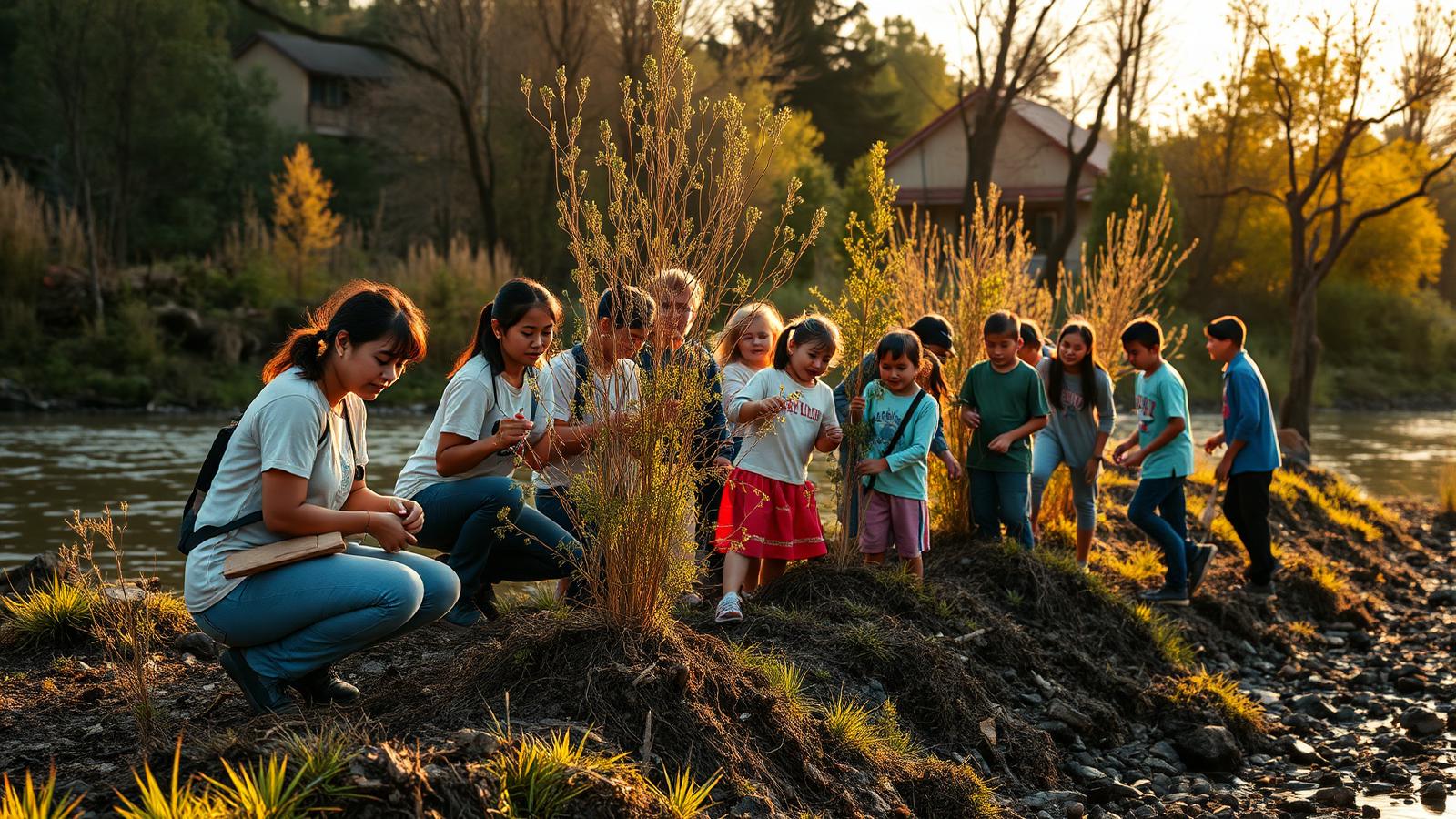
The clearest and most replicable example is structured environmental education aimed at schools or young people. A regional business — a landscaping company, a hardware store, a food producer — running a recurring programme that brings local students through hands-on workshops on composting, native plant gardening or watershed health is doing exactly the grassroots work this category recognises. Strength comes from specificity and continuity: not "we occasionally talk to schools" but "12 workshops reaching approximately 400 students annually for the past three years, in partnership with two local school districts."
Volunteer mobilisation is another strong, highly visual example. A company that organises and funds employee volunteer days for river or beach cleanups, tree planting in degraded urban areas, or invasive species removal — and can point to cumulative volunteer hours, pounds of waste removed, trees planted and acres restored — exemplifies this category. The organising, funding and mobilising is what earns recognition, distinct from simply writing a cheque to an environmental nonprofit.
Local ecosystem restoration partnerships are more specialised but powerful. A coastal business — a seafood restaurant, a marina, a coastal developer — that funds and actively participates in mangrove or wetland restoration alongside a conservation nonprofit or university research group ties its business identity directly to the health of a specific ecosystem its community depends on. These partnerships produce excellent storytelling because they are geographically specific and visually compelling.
Awareness and public education initiatives are lower-intensity but still valid, particularly for businesses without resources for hands-on programming: a guide to integrated pest management for home gardeners, a public workshop series on home energy efficiency, or accessible explainer content about local recycling rules — a frequent source of public confusion, since requirements vary significantly by municipality. The test is whether the content is genuinely substantive rather than thinly veiled advertising.
Partnering with existing community organisations, rather than building new programming from scratch, is often the most credible path for smaller businesses. A small business that becomes a sustained financial and volunteer partner of an existing local environmental nonprofit — showing up year after year, not just writing an annual cheque — builds a track record that speaks to genuine commitment rather than opportunistic association.
The most important distinguishing factors are reach (how many people, over what geography, are actually engaged), continuity (a sustained programme versus a one-off event), and depth of engagement (hands-on participation and education versus passive sponsorship or a single donation).
Centre the people, not just the metrics. A photo from the cleanup day, a quote from a student who went through the workshop, or a clip from the restoration site communicates authentic impact better than a tonnage figure — but pairing the human story with one supporting number gives the post both emotional and factual credibility.
These are illustrative industry cases used to explain the category. They are not Ecopulsive awardees or affiliates.
12 workshops, ~400 students a year, three years running, with two school districts.
Company-organised and funded, with cumulative hours and waste removed reported.
Trees planted and canopy restored in degraded neighbourhoods, tracked year over year.
A coastal business funding and joining restoration alongside researchers.
Clear, municipality-specific guidance that fixes real everyday confusion.
Sustained funding and volunteers, year after year, not a single annual cheque.
Ecopulsive issues verifiable recognition certificates backed by transparent criteria. Tell us what you built and the numbers behind it.