
Light as a service
The manufacturer keeps ownership of fixtures, so durability and repairability become profit drivers.
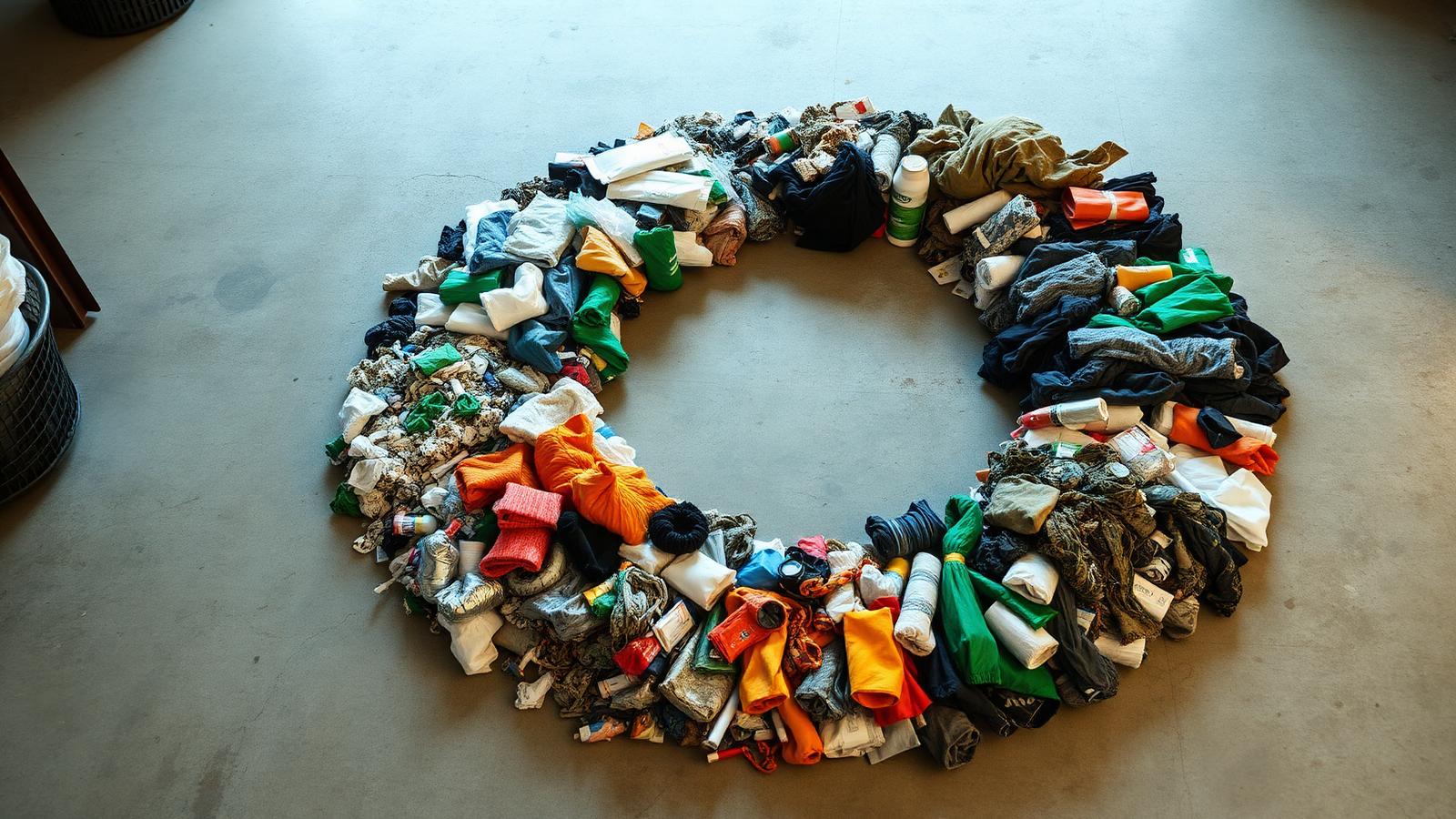
Closing the loop so materials keep circulating instead of becoming waste.
Recipients of this recognition receive the official Ecopulsive Circular Economy Leadership Award Winner banner for use across their website, packaging, social media, email signatures, marketing materials, reports and presentations. The banner must always be displayed complete and unaltered, with the Ecopulsive logo, award category and award year intact.
Read the banner usage guidelinesCircular Economy Leadership recognises companies that have restructured how materials move through their business — away from the traditional linear model of "extract, manufacture, use, discard" and toward a closed-loop system where products, components and materials are reused, refurbished, recycled or regenerated rather than becoming waste.
Where Sustainable Innovation is about inventing something fundamentally new, Circular Economy Leadership is often about redesigning something that already exists — a product, a packaging format, a supply chain, a business model — so that its materials keep circulating rather than terminating in a landfill or incinerator after a single use.
The most instructive real-world example is the "light as a service" model, in which a manufacturer retains ownership of the light fixtures it installs in commercial buildings rather than selling them outright. Customers pay for illumination as a service; the manufacturer remains responsible for maintaining, repairing and eventually refurbishing or recycling the components.
Because the manufacturer owns the hardware for its full lifecycle, it has a direct financial incentive to design fixtures that are durable, repairable and made of easily separable materials — the opposite incentive structure from a traditional sell-and-forget business. Models like this have been cited by circular-economy bodies precisely because they demonstrate that circularity can be a profitable operating model, not just a sustainability add-on.
Apparel and textiles offer some of the most visible examples. A clothing brand running a formal take-back program — where customers return worn garments in exchange for store credit, and the brand mechanically or chemically recycles the fabric into new yarn — is doing real work in a notoriously wasteful industry. A more subtle version: a denim manufacturer that redesigns its jeans around a single fibre type rather than a cotton-elastane-polyester blend, specifically so the garment can be mechanically recycled without the fibre-separation problem that makes most blended fabrics essentially unrecyclable.
Packaging is another strong home. A beverage company that has switched from single-use plastic to a reusable glass bottle system, with a deposit-and-return network that collects, washes and refills bottles, is reinventing a practice that used to be standard with modern logistics and tracking. Similarly, a company producing packaging film formulated to be compatible with existing municipal recycling streams — rather than requiring specialised industrial composting most consumers cannot access — solves a real circularity failure point: packaging that is technically "recyclable" but practically landfilled.
Electronics and furniture provide two more useful examples. A furniture manufacturer offering refurbishment and resale keeps high-embodied-carbon steel frames and hardwood in circulation for additional decades. An electronics manufacturer designing laptops with modular, user-replaceable batteries, keyboards and storage applies circular thinking at the product-architecture level — arguably the most valuable form of circularity, since designing waste out from the start beats recovering value after the fact.
The strongest submissions demonstrate a closed loop with evidence at each stage: what happens to the product or material at end of first use, what specific process recovers, refurbishes or recycles it, and what percentage of material is successfully diverted from landfill or incineration as a result.
Diversion rate, recycled-content percentage and the number of product life-cycles achieved — how many times this specific unit of material has been reused — are the concrete metrics that separate genuine circular economy leadership from a company that has added a recycling bin to its office breakroom.
"This company doesn't sell light bulbs — it sells light, and takes every bulb back when it burns out" works because it reframes a familiar product, then rewards the surprise with the underlying logic. Make closing the loop concrete through one physical object the reader can picture: a bottle, a jacket, a light fixture.
These are illustrative industry cases used to explain the category. They are not Ecopulsive awardees or affiliates.
The manufacturer keeps ownership of fixtures, so durability and repairability become profit drivers.
Worn clothing returned for credit, then mechanically or chemically recycled back into yarn.
One fibre type by design, so the jeans can actually be recycled at end of life.
Deposit-and-return logistics that wash and refill glass instead of manufacturing new.
Office furniture collected, reupholstered and resold rather than skipped during a relocation.
User-replaceable batteries and keyboards so one failed part doesn't kill the whole device.
Ecopulsive issues verifiable recognition certificates backed by transparent criteria. Tell us what you built and the numbers behind it.